PRE-LAUNCH ENROLLMENT IS OPEN — GET LIFETIME ACCESS FOR $47
Learn a repeatable system for turning ordinary ideas and clips into short-form stories people want to finish.
Regularly $197—save $150 during the pre-launch.
Turn Ordinary Ideas into SHORT-FORM STORIES People Actually Want to Finish
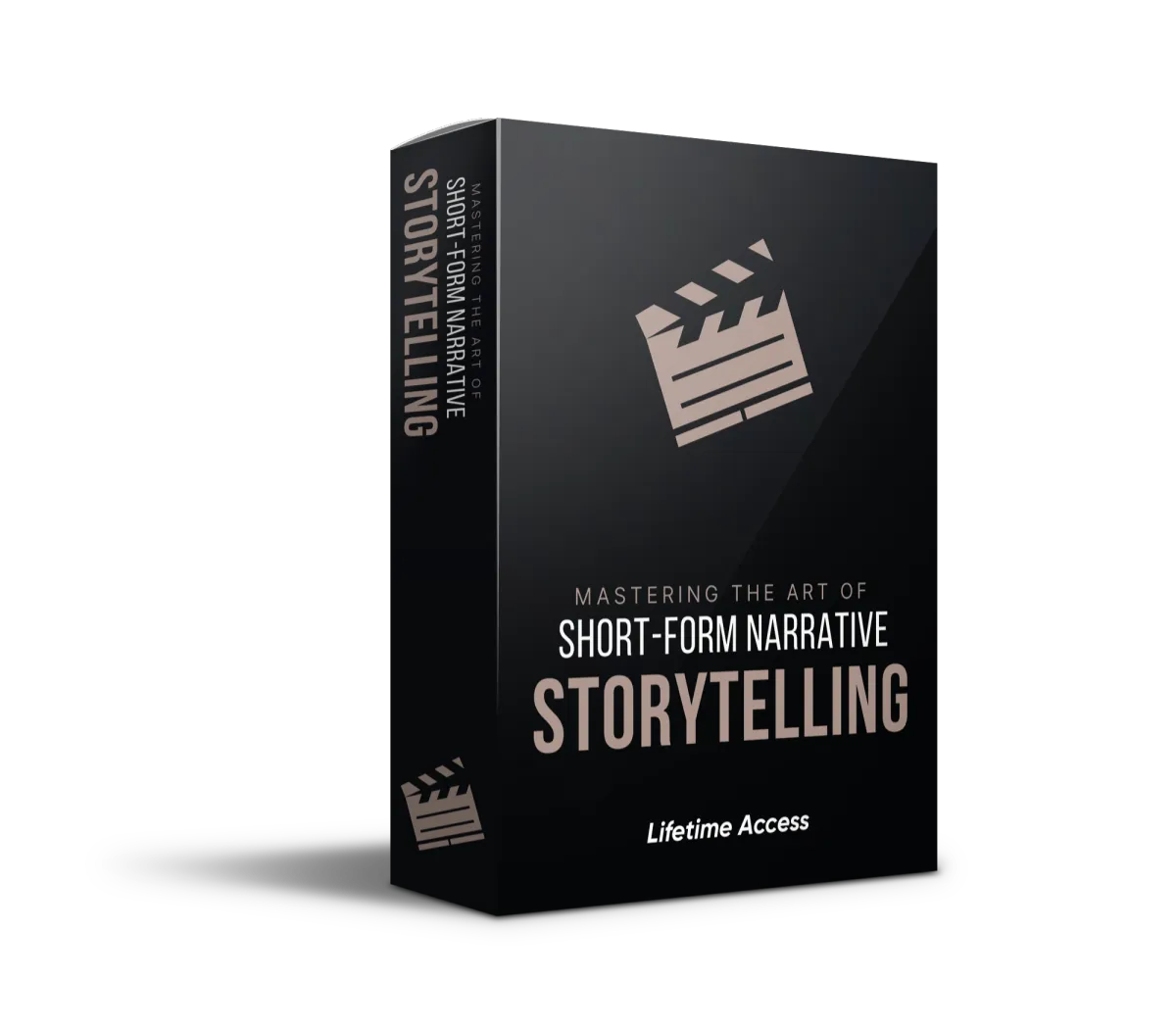
Mastering the Art of Short-Form Narrative Storytelling is for creators, educators, coaches, freelancers, and small-business owners who know what they want to say—but struggle to turn it into a short-form story people actually want to finish. Learn a practical system for building stronger hooks, creating satisfying micro-stories, and improving your videos without expensive equipment or complicated filmmaking techniques.
PRE-LAUNCH ENROLLMENT IS OPEN!
Enroll during the pre-launch and save $150 on lifetime access to the complete course. You’ll learn how to build and score stronger openings, turn those hooks into complete micro-stories, and develop a repeatable process for planning, publishing, studying, and improving your content.
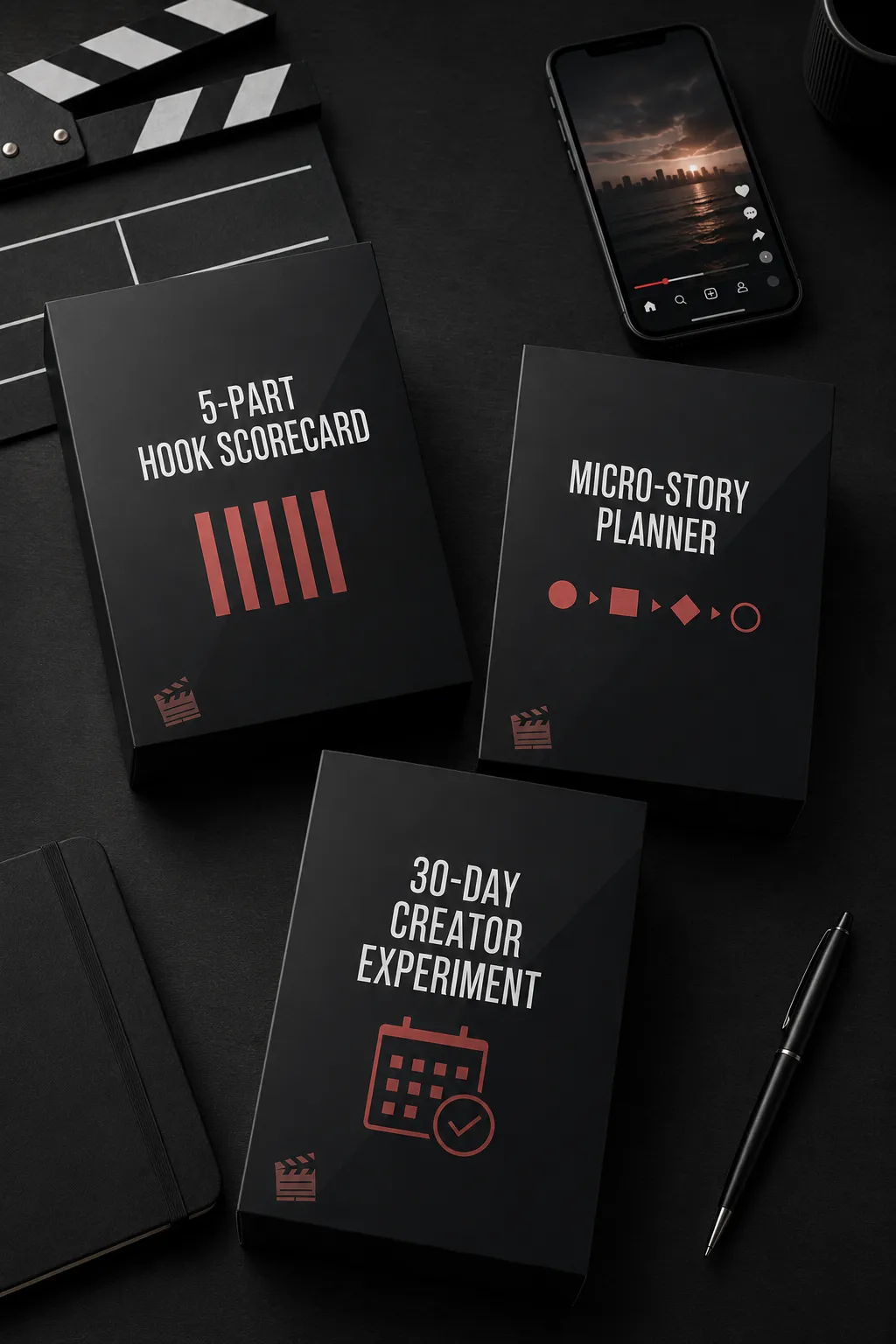
You’ll also receive the 5-Part Hook Scoring Checklist, Micro-Narrative Planner, Storytelling Templates, and 30-Day Creator Challenge.
Get lifetime access during the pre-launch for just
$47 — regularly $197.
That’s $150 off the full course price.

EARN ATTENTION FAST
Combine verbal, text, visual, audio, and caption hooks to create curiosity, context, and clarity in the first few seconds.

KEEP VIEWERS WATCHING
Turn your hook into a complete micro-story using Hook → Context → Obstacle → Progress → Payoff so viewers have a reason to stay for the ending.

CREATE A MEMORABLE PAYOFF
Plan, edit, publish, and review with a repeatable workflow so you can improve faster, identify winning formats, and stop reinventing every video.
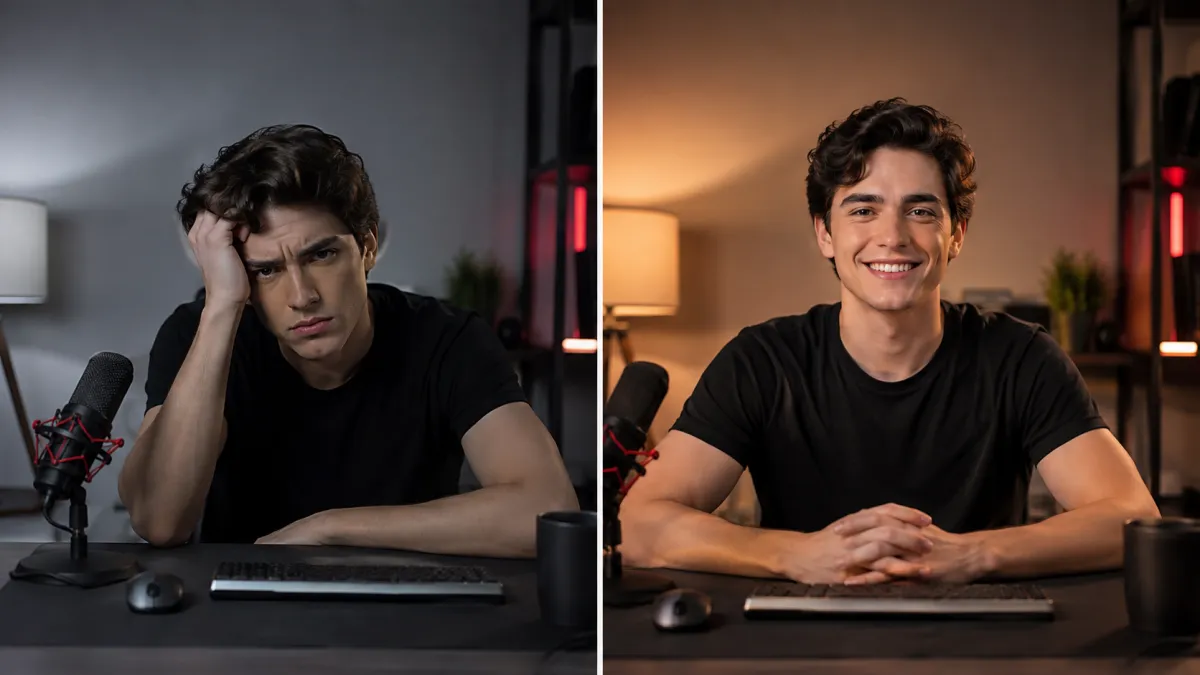
Let's Face It...
VIEWERS LEAVE WHEN YOUR STORY
DOESN'T GIVE THEM A REASON TO STAY
❌
YOUR OPENING DOESN'T
EARN ATTENTION
If the first few seconds lack curiosity, context, or clarity, viewers have no reason to stay long enough for your message to land.
❌
YOUR VIDEO HAS NO
CLEAR STORY ARC
A collection of clips is not a story. Without an obstacle, visible progress, and a protected payoff, the middle feels flat and viewers stop waiting for the ending.
❌
YOUR PAYOFF DOESN'T
FULFILL THE HOOK
If the ending doesn't deliver the answer, result, or reveal promised by the hook, the story feels incomplete—even when the editing looks polished.
Introducing
Mastering the Art of Short-Form Narrative Storytelling
✅
EARN ATTENTION FAST
Build a coordinated five-part opening using verbal, text, visual, audio, and caption hooks to create curiosity, context, and clarity.
✅
BUILD A COMPELLING MICRO-STORY
Turn ordinary ideas and footage into a clear Hook → Context → Obstacle → Progress → Payoff story that gives viewers a reason to stay for the ending.
✅
BUILD A REPEATABLE CONTENT SYSTEM
Plan, edit, publish, review, and improve with a repeatable workflow that helps you identify winning formats instead of reinventing every video.
AND THAT’S ONLY PART OF THE SYSTEM...
Scroll down to explore the complete course, practical exercises, storytelling templates, and 30-Day Creator Challenge included with your lifetime access.
Learn How To:

BUILD HOOKS THAT EARN ATTENTION
Combine verbal, text, visual, audio, and caption hooks to create curiosity, context, and clarity in the first few seconds.
BUILD COMPLETE
MICRO-STORIES
Turn ordinary ideas into a clear Hook → Context → Obstacle → Progress → Payoff story that gives viewers a reason to stay for the ending.


EDIT FOR
VIEWER RETENTION
Use story-driven B-roll, text, sound, and a retention-cut pass to remove dead time and keep every beat moving toward the payoff.
BUILD COMPLETE
MICRO-STORIES
Turn ordinary ideas into a clear Hook → Context → Obstacle → Progress → Payoff story that gives viewers a reason to stay for the ending.

Mastering the Art of Short-Form
Narrative Storytelling
Course Curriculum
The Architecture of Attention
Understand why viewers keep watching some short videos—and abandon others within seconds.
Learn how watch time, completion, viewer behavior, and platform distribution work together to influence what gets shown to more people.
Learn how watch time, completion, viewer behavior, and platform distribution work together to influence what gets shown to more people.

The Five-Part Hook System
Build a coordinated opening using verbal, text, visual, audio, and caption hooks instead of relying on one clever first sentence.
Learn how each hook element adds curiosity, context, or clarity without giving away the payoff too soon.
Score your complete opening with the 25-Point Hook Scorecard so you can identify weak elements and improve them before publishing.

The Micro-Narrative Arc
Give viewers a clear reason to keep watching after the opening hook.
Build each story around a clear Hook → Context → Obstacle → Progress → Payoff progression.
Turn ordinary ideas, lessons, products, demonstrations, and experiences into complete short-form stories whose ending fulfills the opening promise.

Editing For Viewer Retention
Build the spoken story first so every beat moves the viewer toward the payoff.
Use story-driven B-roll, text, music, sound, and timeline markers only where they add context, evidence, progress, or emotion.
Use a retention-cut pass to remove repeated information, slow moments, and anything that delays the payoff.

Limited Time PRE-LAUNCH BONUS CREATOR PACK
Enroll During Pre-Launch and Get the Complete Creator Tool Pack — Plus $74 in Extra Story-Building Bonuses FREE
You won't just learn the system. You'll get the tools to actually use it every time you create.
INCLUDED WITH YOUR COURSE
5-Part Hook Checklist + 25-Point Hook Scorecard
— $27 Value
Stop guessing whether your opening is strong enough. Score your verbal, text, visual, audio, and caption hooks before you publish and instantly see which part needs improvement.Micro-Arc Story Planner — $27 Value
Turn an ordinary idea into a complete short-form story by mapping your Hook → Context → Obstacle → Progress → Payoff → Takeaway before you ever open your editor.30-Day Creator Challenge + Experiment Log — $37 Value
Turn your next 30 videos into intentional experiments. Track what works, identify winning hooks and story formats, and stop reinventing your content from scratch every time.
PLUS — PRE-LAUNCH ONLY
BONUS #1 — Never Start From a Blank Timeline Again
— $47 Value
A 58-page story-starter field guide packed with 101 Short-Form Story Ideas + 10 Reusable Micro-Narrative Frameworks designed to help you find the stories hiding inside your everyday work, expertise, products, projects, mistakes, lessons, and experiences.Instead of asking, “What should I post today?” you'll have a library of proven story patterns you can reach for whenever you're stuck.
BONUS #2 — Never Start From a Blank Timeline: Audio Field Guide — $27 Value
Take the Story Idea Vault with you. In this audio companion, Mario walks you through the major micro-story frameworks, how to recognize story-worthy moments, and how to find the problem, progress, and payoff inside an ordinary idea.
Listen while you drive, walk, exercise, or brainstorm your next batch of content.
YOUR CREATOR TOOL VALUE
5-Part Hook Checklist + Scorecard — $27
Micro-Arc Story Planner — $27
30-Day Creator Challenge + Experiment Log — $37
Never Start From a Blank Timeline Again — $47
Audio Field Guide — $27
TOTAL CREATOR TOOL VALUE: $165
And during the pre-launch, they're all included with your course at no additional charge.
The two Never Start From a Blank Timeline bonuses disappear when pre-launch ends and will be offered separately afterward.
What's Included In
Mastering the Art of Short-Form Narrative Storytelling
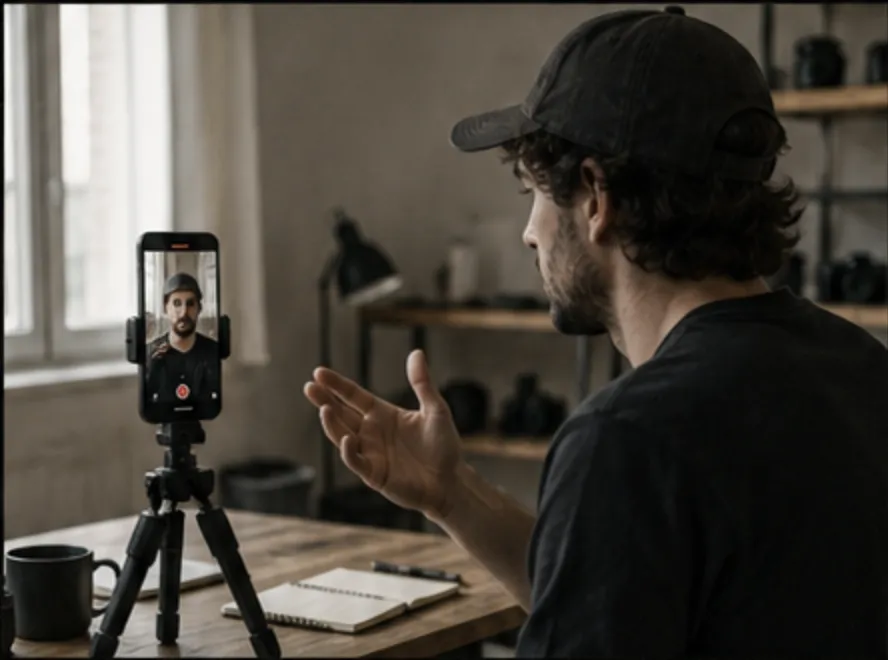
01 - Focused
Short, focused lessons help you master one storytelling decision at a time without overwhelming you with unnecessary theory.
02 - Step-by-Step
Clear demonstrations show you what to do, why it works, and how to apply it to the next short-form story you create.
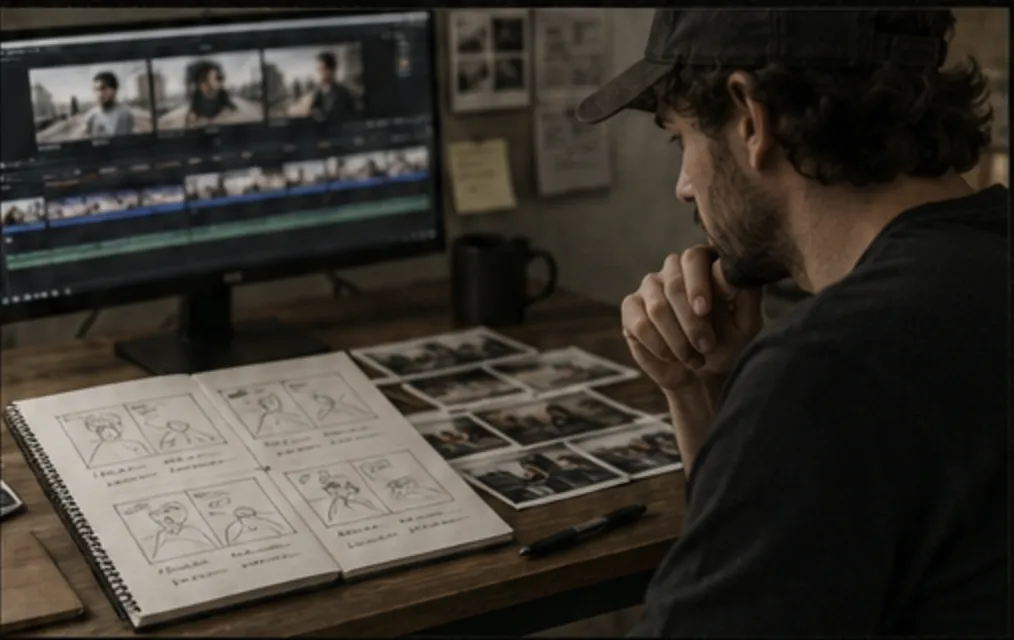

03 - Ready to Apply
Finish each lesson knowing exactly what to try next so learning immediately turns into creating, testing, and improving.
Daily Practice Exercises
1. Set Your Goal

Decide what storytelling skill you want to improve today.
2. Practice

Apply one lesson or technique with focused, intentional action.
3. Review & Refine

Look at what you created, identify what worked, and improve what didn’t.
4. Track Your Progress

Record what you tested, what you learned, and what you want to adjust next time.
5. Apply & Create

Use what you learned to make stronger, more intentional short-form content.
6. Repeat & Grow

Keep practicing, testing, and refining so your storytelling becomes more confident and consistent over time.
Build Short Videos People Actually Finish
A proven 3-part story framework that keeps viewers watching from start to finish.
1 - Hook
Grab attention fast.
Create an opening that immediately gives viewers a reason to stop scrolling and pay attention.

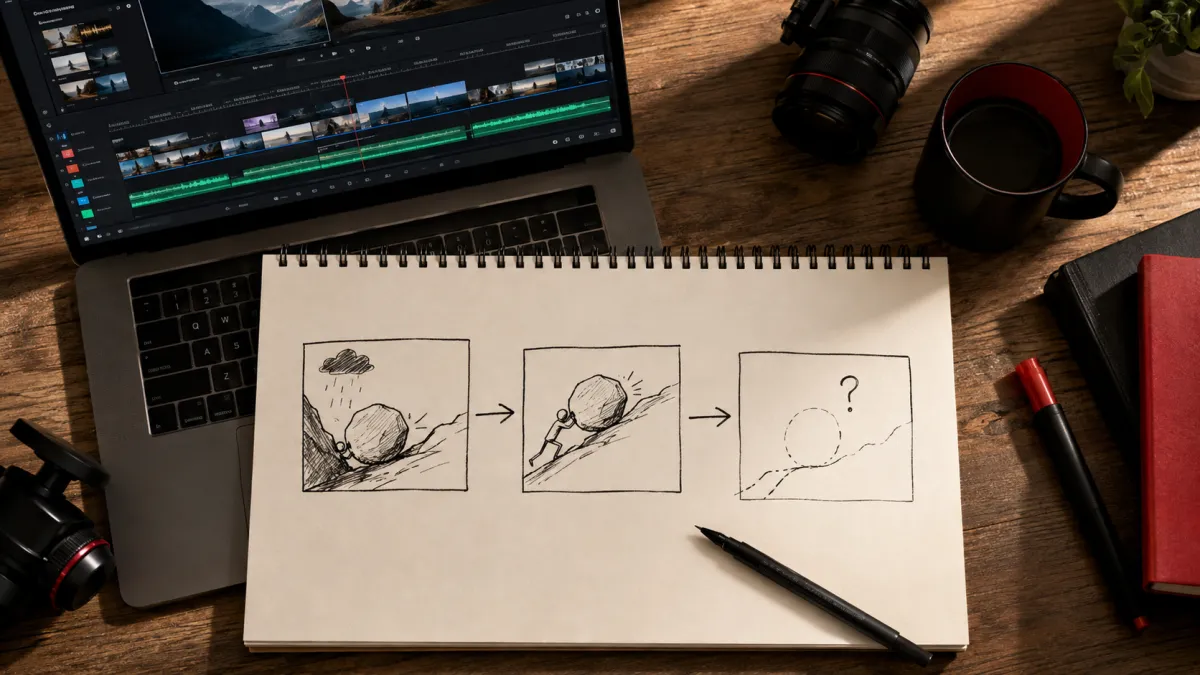
02 -Tension
Keep viewers curious.
Build interest by creating a question, obstacle, progression, or unresolved moment that makes people want to know what happens next.
03 - Payoff
Deliver a satisfying finish.
Reward the viewer’s attention with a clear result, reveal, transformation, lesson, or conclusion that fulfills the promise of the opening.
Who Is This Course For?
You want to create short-form videos that capture attention and keep viewers watching
You want a practical storytelling system instead of relying on trends, guesswork, or random editing tricks
You want to turn ordinary ideas, products, demonstrations, lessons, or experiences into clear, compelling micro-stories
You already know you need a strong hook, but you want to understand how to actually build one
You want a repeatable process for creating videos with a strong opening, meaningful tension, clear progression, and a satisfying payoff
You want to spend less time wondering what your video is missing—and more time creating with confidence
Who Will Benefit Most?
This course is especially valuable for:
Content creators making TikToks, Instagram Reels, and YouTube Shorts who want stronger hooks and better viewer retention
YouTubers and aspiring influencers who want to turn ordinary ideas into stories people actually want to finish
Coaches, educators, and course creators who need to explain ideas clearly without turning every video into a lecture
Freelance videographers and editors who want to create more engaging, story-driven content for clients
Small-business owners, entrepreneurs, and sales professionals using video to promote products, services, and expertise
Photographers, designers, filmmakers, and other visual creatives expanding their skills into short-form video
Marketing and social-media professionals who want a repeatable storytelling framework instead of relying on trends and guesswork
Beginning and developing creators who want a clear step-by-step process for planning, creating, and improving their videos
If you have something worth saying, showing, teaching, or selling—but struggle to make people care long enough to hear it—this course was built for you.
Who Is This Course NOT For?
This course is not for you if:
You’re looking for a guaranteed shortcut to viral views without practicing, testing, and improving your work
You only want software-specific tutorials and are not interested in learning how hooks, story structure, audience attention, and creative decisions work together
You want someone else to give you a formula without being willing to apply it, publish, review the results, and improve
You’re not interested in developing a repeatable storytelling process you can use across different topics, platforms, and editing programs
You expect one video, one trick, or one trend to replace the need for consistent creative practice
This course is designed for creators who want to understand why short-form stories work—and who are willing to use that understanding to make better videos over time.
Meet Your Instructor

My name is Mario Macari, and for more than four decades, I’ve made a living turning ideas into visual stories.
I started my career long before smartphones, vertical video, social media, or AI were part of the creative conversation.
For over 40 years, I’ve worked across graphic design, illustration, photography, animation, video production, editing, filmmaking, course creation, and visual communication. I’ve created video for major corporations, produced marketing and instructional content, and spent 15 years teaching at the college level.
Over that time, I watched the tools change completely.
We went from traditional cameras, broadcast production, paste-up, film, and desktop editing... to smartphones, social platforms, vertical video, artificial intelligence, and a world where a creator may have only a few seconds to convince someone not to scroll away.
At first, it seemed like everything about communication had changed.
But the longer I worked with new formats, the more I realized something important:
The tools had changed. Human attention had not.
People still lean in when they become curious.
They still stay when they want to know what happens next.
And they still feel rewarded when a story delivers on the promise that made them start watching in the first place.
That realization became especially important as short-form video exploded.
I kept seeing talented people struggle with the same problem.
They had good ideas.
They understood cameras.
They knew editing software.
They could add captions, music, transitions, graphics, and effects.
Some of them were technically very good.
But they would spend hours creating a 30- or 60-second video...
publish it...
and watch viewers disappear almost immediately.
So naturally, they assumed the answer was better equipment.
Faster editing.
More transitions.
A different platform.
A trending sound.
A more dramatic personality.
Or some mysterious algorithm trick they hadn’t discovered yet.
But after decades of working in visual communication and years of teaching creative concepts, I kept coming back to the same conclusion:
The problem usually wasn’t the production.
The story itself had never been clearly structured.
The viewer wasn’t given a strong enough reason to stop.
Then a reason to stay.
Then a payoff that rewarded them for watching.
That is when I began breaking short-form storytelling into the same kind of clear, teachable steps I had used throughout my career as a designer, filmmaker, and professor.
Instead of telling someone to “make the opening more interesting,” I wanted to show them how.
Instead of saying, “Improve retention,” I wanted to explain what actually needs to happen in the story to make someone curious about the next moment.
Instead of telling creators to “just keep posting,” I wanted to give them a process they could use to plan, create, evaluate, and improve their work without reinventing everything every time they opened an editing timeline.
That process eventually became the foundation for Mastering the Art of Short-Form Narrative Storytelling.
At the center of it is a simple idea:
Hook → Tension → Payoff
First, give the viewer a reason to stop.
Then give them a reason to stay.
Finally, reward their attention with a result, reveal, transformation, lesson, twist, or satisfying conclusion.
From there, we can build the techniques around it — verbal hooks, text, visuals, audio, curiosity loops, obstacles, progression, B-roll, editing, and retention.
But the story comes first.
Because after over 40 years in creative communication, that may be the most valuable lesson I can pass along:
Great creative work rarely comes from knowing one secret trick.
It comes from understanding the principles underneath the tools.
And once you understand those principles, you don’t have to stare at an empty timeline wondering what your video is missing.
You have a process.
You know what needs to happen next.
And you can take an ordinary idea and shape it into a short-form story people actually want to finish.
Frequently Asked Questions
What skill level is this
program for?
This course is designed for beginners, developing creators, and experienced creators who want a stronger storytelling system.
You do not need a film degree, professional equipment, or advanced editing skills. The lessons walk you step by step through hooks, micro-story structure, pacing, visuals, captions, and editing decisions that help hold attention.
If you already create videos, the frameworks will help you become more intentional and consistent instead of relying on guesswork.
The storytelling principles are not tied to one specific editing program. You can apply them in Premiere Pro, Final Cut Pro, DaVinci Resolve, or other timeline-based editors.
How long do I have access to the program & when does it start?
Your enrollment includes lifetime access to the course lessons, worksheets, templates, bonuses, and future course updates.
You can move through the training at your own pace and return whenever you want to review a lesson or refresh a skill.
During the pre-launch period, you’ll receive access to all currently available materials, with additional lessons added according to the course release schedule.
Your access begins immediately with the currently completed modules, and additional modules will be added as they are released.
Can't I learn all of this on Youtube?
Absolutely—you can find plenty of useful short-form video advice on YouTube.
The problem is that the information is usually scattered across dozens of videos, taught by different creators using different systems, with no clear path showing you what to learn first, what comes next, or how the pieces work together.
This course brings the essential principles into one practical, step-by-step storytelling system.
You’ll learn how to build stronger verbal, text, visual, audio, and caption hooks—and then carry that attention through context, tension, progression, and a satisfying payoff.
More importantly, you won’t just learn the concepts. You’ll have a process for actually using them.
The course includes structured exercises, planning worksheets, the 5-Part Hook Scorecard, micro-story planning tools, and a 30-day practice system designed to help you create, evaluate, and improve your videos.
Instead of spending hours collecting disconnected tips, you’ll have a repeatable framework you can return to every time you sit down to create.
Do I need expensive equipment or special software?
No. You do not need an expensive camera, a studio, or a large production crew to use this storytelling system.
You can practice the techniques with a modern smartphone, basic lighting, and clear audio. The goal is to learn how to make the story stronger first—then let your equipment support it.
The course is also not tied to one specific editing program. You can apply the principles in Premiere Pro, Final Cut Pro, DaVinci Resolve, or another timeline-based editor with basic cutting, text, and audio controls.
The most important tools are not expensive gear or advanced software.
They are a clear idea, a strong story structure, and a repeatable process you can practice and improve over time.
Should I take this course before investing in expensive cameras, equipment, or software?
Yes. Expensive gear can improve production quality, but it cannot fix a weak hook, a confusing story, or an ending that gives viewers no reason to keep watching.
This course teaches the foundation first: how to create a strong opening, build curiosity and tension, deliver a satisfying payoff, and make editing decisions that support the story.
Start with the equipment you already own.
Once you understand how effective short-form storytelling works, you’ll be in a much better position to decide which cameras, microphones, lighting, accessories, or software will actually improve your work.
Learn the story first. Upgrade the tools when you know what you truly need.
Explore the lessons, review the storytelling framework, and decide whether the course is right for you. If it is not a good fit, request a refund within seven days of purchase.
Is there a guarantee?
Absolutely.
Your enrollment in Mastering the Art of Short-Form Narrative Storytelling is protected by a 7-Day Creator Confidence Guarantee.
Take some time to explore the lessons, review the storytelling framework, work through the exercises, and decide whether the course is the right fit for you.
If you decide it isn’t, simply contact us within 7 calendar days of your purchase and request a full refund.
Your refund will be returned to your original payment method, and access to the course and included resources will end once the refund is issued.
Try the course. Explore the system. Decide with confidence.